Evaluating the Continuous Line Design of Pine Tree for Modern Visual Projects
The continuous line design of pine tree has emerged as a distinctive stylistic choice in contemporary graphic design, bridging the gap between minimalist aesthetics and organic complexity. This technique involves creating an entire image using a single, unbroken stroke that weaves through the composition without lifting the drawing instrument. When applied to botanical subjects like pine trees, the result is a fluid, interconnected representation that captures the essence of the subject while maintaining a clean, modern look. For designers, illustrators, and hobbyists evaluating visual assets, understanding the nuances of this style is crucial for determining its fit within specific projects.
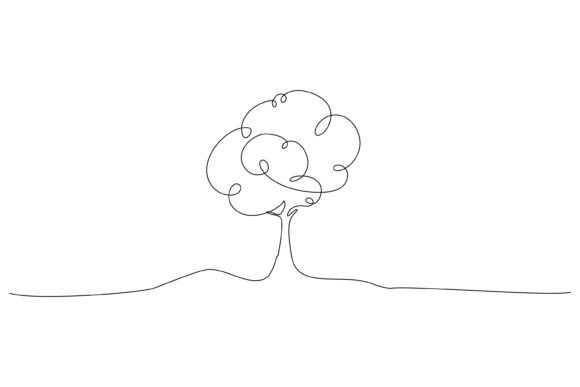
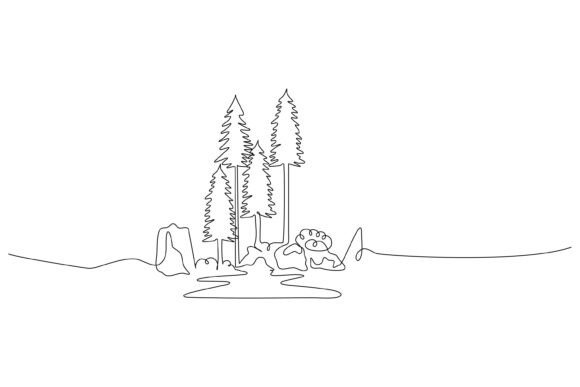
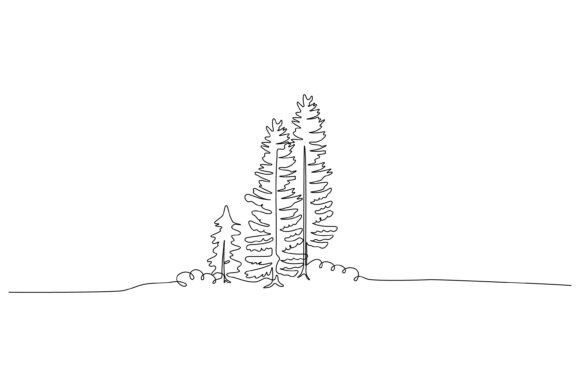
At its core, a continuous line design of pine tree relies on the economy of line. Unlike traditional illustration methods that use shading, cross-hatching, or multiple layers to define form and texture, this approach depends entirely on the path of the line itself. The artist must plan the trajectory carefully to ensure that the needle clusters, trunk texture, and overall silhouette are recognizable despite the lack of breaks. This constraint often leads to surprising creative solutions, where the line loops back on itself to create density or stretches out to suggest height and grace. The resulting image is typically presented as a single line decorative element drawn on white background, offering high contrast and immediate visual clarity.
Comparing Continuous Line Art to Traditional and Digital Alternatives
When selecting a visual style for branding, web design, or print media, it is essential to weigh the continuous line design of pine tree against other available options. Traditional botanical illustrations, for instance, prioritize scientific accuracy and detailed texturing. While these are invaluable for educational materials or heritage brands, they can appear heavy or dated in modern digital interfaces. In contrast, the continuous line style offers a lightweight alternative that scales exceptionally well across different screen sizes and resolutions.
Another common alternative is the flat icon or geometric logo style. These formats reduce complex shapes to basic polygons and solid colors. While effective for app icons or navigation menus, they often lack the organic warmth and hand-drawn feel that a continuous line provides. The continuous line design of pine tree strikes a balance; it retains the fluidity of a sketch, suggesting movement and life, while remaining simple enough to function as a logo or a UI element. This makes it particularly suitable for industries such as wellness, outdoor recreation, and sustainable products, where conveying a connection to nature without clutter is paramount.
Digital vector tracing of photographs is another route some creators take. However, auto-traced images often result in messy, overly complex paths that do not translate well to small scales. A deliberately crafted continuous line design avoids this pitfall by simplifying the subject matter intentionally. The decision to use this style is not just about aesthetics; it is a strategic choice to enhance readability and reduce visual noise in a crowded media landscape.
Technical Formats and File Delivery: EPS, SVG, and JPG
For professionals integrating these designs into their workflows, the format of the delivered file is as important as the artistic style itself. High-quality resources for a continuous line design of pine tree typically include a suite of file types to ensure versatility. Understanding the strengths and limitations of EPS, SVG, and JPG formats is key to making an informed purchase or selection.
The SVG (Scalable Vector Graphics) format is often the most valuable for web developers and UI designers. Because it is code-based, an SVG allows the continuous line to remain crisp at any zoom level, from a tiny favicon to a massive billboard display. Furthermore, SVGs can be styled directly with CSS, meaning the color of the line can be changed dynamically to match a website's theme or respond to user interactions like hover states. This flexibility makes the continuous line design of pine tree in SVG format a powerful tool for responsive design.
For print professionals and those using legacy design software, the EPS (Encapsulated PostScript) file remains the industry standard. EPS files preserve the vector data, allowing for infinite scaling without pixelation, much like SVGs. They are compatible with major vector editing tools like Adobe Illustrator and CorelDRAW, enabling designers to modify the anchor points of the single line if minor adjustments are needed. This editability is a significant advantage over raster formats, ensuring that the asset can be adapted to various layout constraints.
Finally, the JPG (Joint Photographic Experts Group) format serves a different purpose. As a raster image, a JPG of a continuous line design of pine tree is ready-to-use for non-designers or for platforms that do not support vector uploads. It is ideal for social media posts, blog headers, or quick mockups. However, users must be aware that JPGs have a fixed resolution. Enlarging a JPG beyond its original dimensions will result in pixelation and loss of quality. Therefore, while the JPG offers convenience, the vector formats (EPS and SVG) provide long-term utility and professional fidelity.
Strategic Applications and Best-Fit Scenarios
Determining when to utilize a continuous line design of pine tree requires an assessment of the project's goals and audience. This style excels in contexts where elegance, simplicity, and a touch of artisanal charm are desired. It is particularly effective for branding in the eco-friendly sector, where the organic flow of the line reinforces messages of sustainability and natural growth. Yoga studios, organic skincare lines, and hiking gear companies often find that this aesthetic resonates deeply with their target demographics.
In interior design and home decor, the single line decorative element drawn on white background translates beautifully to wall art, throw pillows, and stationery. The minimalism of the design allows it to blend seamlessly into various interior styles, from Scandinavian to bohemian, without overwhelming the space. The stark contrast of the black line against the white background creates a focal point that is calming rather than chaotic.
However, there are scenarios where this style may not be the optimal choice. If a project requires high levels of detail to distinguish between specific species of pine trees for a scientific guide, the abstraction inherent in continuous line art might obscure necessary features. Similarly, for backgrounds that are already busy or textured, a thin single line might get lost, reducing legibility. In such cases, a bolder, filled shape or a more detailed illustration might be required to maintain visual hierarchy.
Limitations and Decision Factors
While the continuous line design of pine tree offers numerous benefits, it is not without limitations. The primary constraint is the reliance on the viewer's ability to interpret the abstracted form. If the line work is too complex or tangled, the image of the tree may become indistinguishable, turning into a mere scribble. Conversely, if the line is too simple, it may fail to convey the characteristic shape of a pine tree. Successful implementation requires a delicate balance, often achieved by experienced artists who understand how to suggest volume and texture through line weight and curvature alone.
Another factor to consider is customization. While vector files allow for color changes, altering the fundamental structure of a continuous line design can be challenging. Adding elements or breaking the line defeats the purpose of the style. Therefore, buyers should evaluate whether the pre-designed asset fits their needs exactly or if they require a bespoke solution. For general decorative purposes, stock continuous line designs are highly cost-effective and efficient. For unique brand identities, commissioning a custom piece ensures that the line flow aligns perfectly with other brand elements.
Ultimately, choosing a continuous line design of pine tree is a decision rooted in the desire for clarity and sophistication. By offering a blend of artistic expression and functional simplicity, this style provides a versatile resource for a wide range of creative endeavors. Whether utilized as a scalable SVG for a tech startup's nature-themed landing page or as a printed EPS for a boutique hotel's stationery, the continuous line approach delivers a timeless aesthetic that continues to evolve with modern design trends.