Integrating Continuous Line Plant Growth Illustrations into Professional Creative Workflows
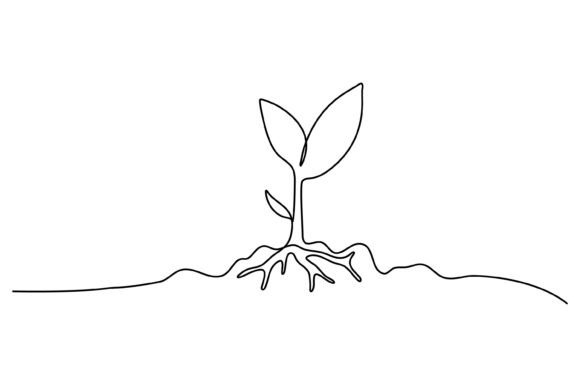
In the current landscape of digital design and content creation, visual assets must do more than simply fill space; they need to convey meaning, maintain brand consistency, and adapt seamlessly across various media. The Design of Illustration of Plant Growth, particularly when executed as a continuous line drawing on a white background, represents a specific category of asset that bridges the gap between organic aesthetics and technical precision. For professionals ranging from marketers and educators to small business owners and freelancers, understanding how to integrate these vector-based resources into a broader workflow is essential for maximizing efficiency and maintaining high-quality output.
This type of illustration is characterized by a single, unbroken stroke that mimics the natural trajectory of a plant stem, leaf, or vine. Unlike complex, multi-layered botanical paintings, the continuous line style relies on minimalism and fluidity. When provided in formats such as EPS, SVG, and JPG, these assets become versatile building blocks rather than static images. They fit into a project lifecycle at multiple stages, serving as foundational elements during the planning phase, decorative accents during execution, or final polish during the review process.
Strategic Placement in the Project Lifecycle
Understanding where the Design of Illustration of Plant Growth fits within your workflow begins with recognizing its dual nature: it is both a symbolic representation of progress and a functional graphic element. In the early stages of a project, such as brainstorming or mood boarding, these illustrations can serve as thematic anchors. For entrepreneurs launching a wellness brand or educators developing curriculum materials, the imagery of growth immediately communicates concepts of development, sustainability, and organic evolution without the need for verbose explanations.
During the active production phase, the utility of these assets shifts toward structural application. Because the design features single line decorative elements drawn on a white background, they offer exceptional flexibility. A web developer might use the SVG version to create responsive dividers between content sections, ensuring the line weight remains crisp on any screen size. Conversely, a print designer working on packaging for a small business might utilize the EPS file to scale the illustration up for a large banner or down for a product label without losing resolution. This adaptability allows the asset to move fluidly between digital and physical deliverables, reducing the need to source multiple different graphics for the same campaign.
Post-production is another critical area where these illustrations add value. In the final review and optimization stage, consistency is key. Using a standardized set of continuous line plant motifs ensures that all collateral—from social media posts to email newsletters—shares a cohesive visual language. This reduces cognitive load for the audience and strengthens brand recognition. Furthermore, because the background is white, these elements can be easily overlaid onto colored backgrounds or textured papers in software like Adobe Illustrator or Photoshop, allowing for last-minute adjustments to match changing brand guidelines or seasonal themes.
Technical Compatibility and File Format Utilization
The effectiveness of integrating the Design of Illustration of Plant Growth into your workflow depends heavily on selecting the correct file format for the task at hand. Each format included in a standard package—EPS, SVG, and JPG—serves a distinct purpose in a professional environment.
- EPS (Encapsulated PostScript): This is the industry standard for print workflows. If you are a publisher preparing a book layout or a marketer designing trade show banners, the EPS file ensures that the continuous line remains vector-based. This means the artwork can be scaled infinitely without pixelation. It also allows for easy manipulation of stroke weight and color within vector editing software, providing total control over the final output.
- SVG (Scalable Vector Graphics): For digital-first professionals, including web designers and app developers, the SVG format is indispensable. Unlike raster images, SVGs are code-based, making them lightweight and fast-loading. They can be animated via CSS or JavaScript, allowing the "growth" aspect of the plant to be literally animated on a webpage. This interactivity can significantly enhance user engagement on landing pages or educational platforms.
- JPG (Joint Photographic Experts Group): While less flexible than vector formats, the JPG version offers immediate usability for non-designers. Bloggers, social media managers, and administrative staff can drag and drop these files directly into presentation software, word processors, or social scheduling tools without needing specialized design applications. The white background ensures they blend naturally into most document templates.
Compatibility extends beyond file types to software ecosystems. These illustrations interact smoothly with major design suites like Adobe Creative Cloud, Affinity Designer, and open-source alternatives like Inkscape. For teams collaborating across different platforms, the universal nature of these formats prevents bottlenecks. A freelancer can edit the master EPS file, while a client can view and approve the JPG proof, ensuring a streamlined approval process.
Implementation Strategies for Efficiency and Consistency
To truly leverage the Design of Illustration of Plant Growth, one must adopt a systematic approach to organization and deployment. Randomly inserting graphics leads to a cluttered and inconsistent aesthetic. Instead, treat these assets as part of a modular design system.
Preparation and Organization: Before starting a project, curate a library of your plant growth illustrations. Organize them by complexity, orientation (vertical vs. horizontal), and density. Naming conventions should be clear (e.g., Plant_Growth_Line_01_Vertical.eps) to facilitate quick retrieval. This preparation phase saves significant time during high-pressure deadlines.
Workflow Integration: Consider creating template files where these decorative elements are already placed on separate layers. For instance, a social media template could have a dedicated layer for "Decorative Lines." When a new post is needed, you simply toggle the visibility of specific plant illustrations or swap them out. This method ensures that every piece of content maintains the same margin spacing and visual balance, adhering to strict quality control standards.
Adaptability in Execution: The continuous line style is forgiving yet elegant. If a project requires a specific color palette that differs from the original black line, the vector nature of the EPS and SVG files allows for instant recoloring. You can change the stroke to a brand's primary green, a soft gold for luxury branding, or a stark blue for corporate reports. This ability to customize ensures the illustration supports the message rather than distracting from it.
Long-Term Value and Scalability
Investing in high-quality, versatile assets like the Design of Illustration of Plant Growth yields long-term dividends. Unlike trend-heavy graphics that may look dated within months, the minimalist continuous line style possesses a timeless quality. It aligns well with modern design principles that favor clarity and simplicity. For businesses and creators, this means the assets purchased today will remain relevant and usable for years, supporting long-term branding strategies.
Moreover, the scalability of these designs supports business growth. As a small business expands from a local flyer campaign to a national digital advertising strategy, the same core assets can be repurposed. The SVG that once decorated a local cafe menu can now animate the header of a nationwide e-commerce site. This continuity helps maintain brand identity even as the scope of operations widens.
From an educational perspective, these illustrations serve as excellent tools for visual learning. Educators can use the sequential nature of plant growth diagrams to explain biological processes or metaphorically represent student progress. The clean lines reduce visual noise, allowing learners to focus on the structure and flow of the information being presented.
Optimizing Quality Control and Final Output
Regardless of the medium, quality control remains paramount. When using the Design of Illustration of Plant Growth, always verify the integrity of the paths in vector software before exporting. Ensure there are no stray anchor points or broken segments that could disrupt the "continuous" illusion. When converting to JPG for web use, pay attention to compression settings to avoid artifacts around the thin lines, which can degrade the professional look of the image.
Consistency in application is equally important. Establish guidelines for how much whitespace should surround the illustrations. Crowding a delicate line drawing with text or other graphics diminishes its impact. By defining clear rules for usage—such as minimum clear space requirements or approved color variations—you ensure that the final output always reflects a high standard of professionalism.
In conclusion, the Design of Illustration of Plant Growth is more than just a decorative image; it is a strategic tool for modern creators. By understanding its technical specifications, organizing it effectively within your asset library, and applying it consistently across your workflows, you can enhance the visual communication of your projects. Whether you are designing a website, publishing a book, or building a brand identity, these continuous line elements provide the perfect balance of organic beauty and functional utility, enabling you to execute your vision with precision and ease.