The Art of Flow: Mastering the Speech Bubble One Continuous Line Design
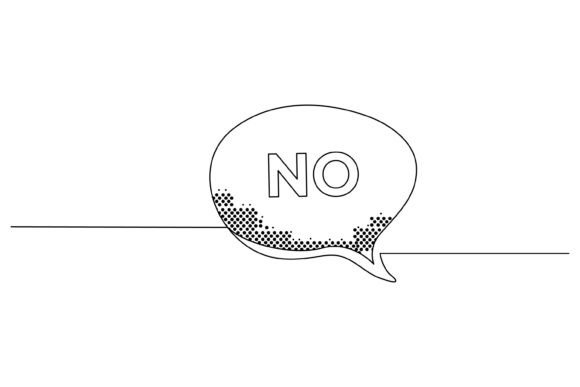
In the vast landscape of graphic design, where trends shift with the seasons, there remains a timeless appeal to simplicity. Among the most versatile and enduring motifs is the speech bubble. It is the universal symbol of communication, thought, and dialogue. However, when this familiar icon is reimagined through the lens of a one continuous line, it transforms from a mere functional element into a piece of artistic expression. This specific style, often referred to as a Speech Bubble One Continuous design, has captivated designers, illustrators, and content creators alike, offering a unique blend of minimalism and fluidity that fits seamlessly into modern visual workflows.
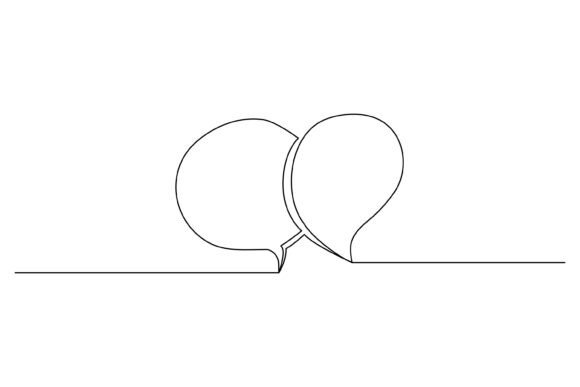
The concept is deceptively simple: a single, unbroken stroke that loops, curves, and twists to form the outline of a conversation balloon and its trailing tail, never lifting the "pen" from the digital canvas. Yet, the execution requires a keen eye for balance and proportion. Unlike traditional speech bubbles defined by sharp vectors and solid fills, the continuous line variant relies on negative space and the rhythm of the stroke itself to convey meaning. This approach strips away unnecessary clutter, leaving behind a clean, elegant aesthetic that feels both organic and deliberate.
Why the Continuous Line Aesthetic Resonates
There is a psychological comfort in continuity. When viewers see a Speech Bubble One Continuous illustration, their eyes naturally follow the path of the line. This creates a subtle sense of movement and flow that static, closed shapes often lack. In an era where attention spans are fleeting, designs that guide the viewer's gaze effortlessly are invaluable. The unbroken nature of the line suggests infinite possibility, mirroring the endless nature of conversation and ideas.
Furthermore, this style aligns perfectly with the current preference for minimalist branding. Companies and creators are moving away from heavy, complex logos toward lighter, more adaptable marks. A one-line speech bubble serves as an excellent logo component for podcasts, communication apps, counseling services, or educational platforms. It communicates the core function—talking or thinking—without screaming for attention. It whispers rather than shouts, which often makes a stronger impression in a noisy digital environment.
The decorative elements drawn on a white background enhance this effect. By isolating the line work against a stark canvas, the focus remains entirely on the curvature and weight of the stroke. This high-contrast presentation ensures maximum legibility across various mediums, from a tiny favicon on a browser tab to a large-scale mural on an office wall.
Versatility Across Industries and Projects
The utility of the Speech Bubble One Continuous design extends far beyond simple decoration. Its adaptability makes it a staple in diverse industries. Consider the world of web design. As websites strive for faster load times and cleaner interfaces, SVG graphics have become the gold standard. A continuous line speech bubble, saved as an SVG, offers crisp rendering at any resolution while maintaining a tiny file size. It can be animated with CSS to draw itself onto the screen, adding a dynamic touch to landing pages without bogging down performance.
In the realm of print media, these designs shine equally bright. Wedding invitations, corporate brochures, and packaging labels often benefit from the hand-drawn feel that continuous line art provides. Even though the files are digital, the aesthetic mimics the imperfection and warmth of a human hand sketching with ink. This adds a layer of authenticity and personalization that generic clip art simply cannot match. For authors and publishers, using this style in book covers or chapter headers can suggest a narrative voice that is intimate and direct.
Educational materials also leverage this format effectively. Worksheets, presentation slides, and e-learning modules use speech bubbles to denote questions, tips, or character dialogue. The one-line style prevents the page from feeling overcrowded. It allows the text inside the bubble to remain the primary focus while the border acts as a gentle, non-intrusive frame. This is particularly useful in children's education, where friendly, approachable graphics can make learning feel less like a chore and more like a conversation.
Understanding the File Formats: EPS, SVG, and JPG
When acquiring or creating these assets, understanding the file formats is crucial for maximizing their potential. A typical package for a Speech Bubble One Continuous design will include EPS, SVG, and JPG files. Each serves a distinct purpose in your workflow, and knowing when to use which can save you hours of frustration.
The SVG (Scalable Vector Graphics) file is arguably the most important for modern digital projects. Because it is vector-based, it uses mathematical paths rather than pixels to define the image. This means you can scale the speech bubble up to the size of a billboard or down to the size of a stamp, and it will remain perfectly sharp. There is no pixelation, no blurring. Additionally, SVGs are code-based, allowing developers to change the color of the line via CSS, animate the drawing process, or interact with it using JavaScript. For web designers and app developers, the SVG version of a one continuous line design is indispensable.
On the other hand, the EPS (Encapsulated PostScript) file is the workhorse of the print industry. While similar to SVG in that it is a vector format, EPS is widely compatible with professional printing software like Adobe Illustrator, CorelDRAW, and InDesign. If you are sending your designs to a commercial printer for business cards, banners, or apparel, the EPS file ensures that the printer's RIP (Raster Image Processor) interprets the lines exactly as intended. It preserves the editability of the anchor points, allowing a graphic designer to tweak the curve of the tail or the thickness of the line to fit a specific layout perfectly.
Finally, the JPG (Joint Photographic Experts Group) file serves as the universal raster format. While it lacks the scalability of vectors, it is universally supported by every image viewer, social media platform, and document editor. If you need to quickly drop a speech bubble into a PowerPoint presentation, a Word document, or a social media post without worrying about vector compatibility, the JPG is your go-to. Usually provided with a transparent or white background, these ready-to-use images offer convenience for non-designers who need high-quality visuals immediately.
Practical Considerations for Implementation
Integrating a Speech Bubble One Continuous element into your project requires a bit of strategic thinking. First, consider the line weight. In a continuous line design, the thickness of the stroke defines the visual weight of the object. If the line is too thin, it may disappear on mobile screens or when printed on textured paper. If it is too thick, the intricate loops of the continuous path might merge, losing the definition of the bubble shape. Always test your design at the actual size it will be displayed.
Color choice is another critical factor. While black on white is the classic look, do not be afraid to experiment. The beauty of vector files lies in their recolorability. A soft pastel line might suit a baby shower invitation, while a bold neon stroke could energize a tech startup's website. However, ensure there is sufficient contrast between the line and the background to maintain accessibility standards. Users with visual impairments must be able to distinguish the speech bubble clearly.
Placement within the composition matters as well. Because the design relies on an open, flowing structure, it interacts differently with surrounding elements compared to a solid box. Text placed inside a continuous line bubble needs careful kerning and leading to ensure it doesn't clash with the wandering path of the border. Sometimes, the tail of the bubble might cut through the text area; in such cases, adjusting the text wrap or shifting the bubble slightly can create a harmonious balance.
The Creative Process Behind the Line
Creating a true Speech Bubble One Continuous design is an exercise in restraint and planning. Artists often start with a rough sketch, mapping out where the line begins and, more importantly, where it ends. The challenge is to create a recognizable shape without crossing the line over itself in a way that creates visual confusion. The "tail" of the speech bubble is usually the trickiest part, as it must connect smoothly to the main body while pointing clearly toward the speaker or subject.
Digital tools have made this process more accessible. Tablets and styluses allow for pressure-sensitive strokes that mimic real ink, giving the digital line a variable width that adds character. However, many designers prefer to draw the path with a uniform width and then apply a variable width profile in post-production to simulate that hand-drawn feel. This hybrid approach offers the best of both worlds: the precision of vector geometry and the soul of analog illustration.
For those looking to purchase these assets, the value lies in the time saved and the quality guaranteed. A professionally crafted Speech Bubble One Continuous pack provides multiple variations—some tall and narrow, others wide and round, some with playful loops, others with strict geometric precision. Having this variety allows a designer to maintain a consistent visual language throughout a project while adapting to different content needs.
Ultimately, the enduring popularity of this design style speaks to our collective appreciation for clarity and elegance. In a world full of noise, the single continuous line cuts through the chaos. It reminds us that communication, at its best, is a fluid, unbroken connection between minds. Whether you are designing a brand identity, laying out a magazine, or building a website, incorporating this element can elevate your work, providing a touch of sophistication that resonates with audiences on a subconscious level.
As you move forward with your creative endeavors, keep the potential of the one continuous line in mind. It is more than just a decorative flourish; it is a functional tool that bridges the gap between art and utility. With the right files in hand—EPS for print, SVG for web, and JPG for quick use—you are equipped to bring your ideas to life with grace and precision. The next time you need to represent a thought, a word, or a idea, let the line flow continuously, connecting your message to your audience without interruption.