The Art of Flow: Understanding Piano and Guitar One Continuous Design
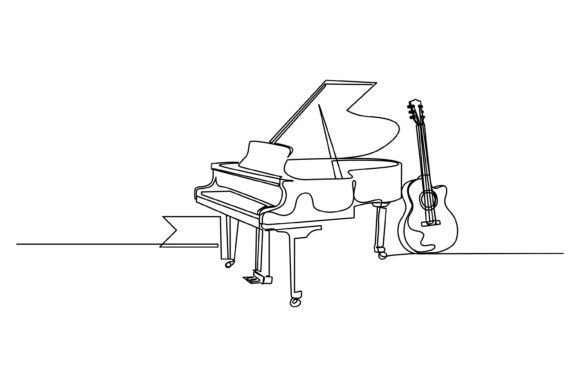
In the vast landscape of digital assets and creative resources, few concepts capture the essence of harmony quite like the Piano and Guitar One Continuous line design. This specific artistic approach merges two of the world's most beloved instruments into a single, unbroken visual narrative. For graphic designers, business owners, musicians, and content creators, understanding the utility and aesthetic value of this continuous line style is essential for elevating projects with sophistication and emotional resonance.
Unlike traditional illustrations that rely on shading, complex textures, or multiple color palettes, the Piano and guitar one continuous line design relies on simplicity and fluidity. It challenges the viewer's eye to follow a path that seamlessly transitions from the percussive geometry of piano keys to the curvaceous body of an acoustic or electric guitar. This article explores the purpose, features, and practical applications of this unique design asset, helping you determine if it is the right fit for your next creative endeavor.
The Philosophy of Continuous Line Art
To truly appreciate the Piano and Guitar One Continuous motif, one must first understand the broader context of continuous line art. This technique, often associated with modern minimalism, involves drawing an image without lifting the pen or brush from the surface. The result is a piece that feels organic, spontaneous, and deeply connected.
When applied to musical instruments, the effect is profound. Music itself is a continuous flow of sound, a journey from one note to the next. By rendering a piano and a guitar in a single stroke, the artist visually represents the interconnectedness of melody and rhythm. The sharp, linear edges of the piano keyboard blend effortlessly into the rounded curves of the guitar's sound hole and neck. This visual metaphor speaks to professionals and consumers alike, suggesting unity, collaboration, and the seamless integration of different musical genres.
For a business owner running a music school or a studio, this design language communicates professionalism without being overly ornate. It suggests that while the instruments are different, the passion behind them is one continuous thread.
Key Characteristics and Visual Features
The Piano and guitar one continuous line design is defined by several distinct characteristics that set it apart from other stock illustrations:
- Simplicity: The absence of clutter allows the core shapes of the instruments to stand out. There are no distracting backgrounds or superfluous details.
- Elegance: The flowing nature of the line adds a touch of class and sophistication, making it suitable for high-end branding.
- Versatility: Because the design is typically presented on a white background with decorative elements drawn cleanly, it adapts easily to various color schemes and layouts.
- Symbolism: It inherently represents duality and harmony, perfect for projects involving partnerships or multi-instrumental themes.
These features make the asset not just a picture, but a storytelling device. Whether used in a logo, a website header, or printed merchandise, the continuous line draws the viewer in, inviting them to trace the path of the music visually.
File Formats and Technical Utility
When acquiring digital assets like the Piano and Guitar One Continuous design, understanding the file formats provided is crucial for maximizing their potential. Typically, these designs are offered in a package containing EPS, SVG, and JPG files. Each format serves a specific purpose in the workflow of creators and professionals.
- EPS (Encapsulated PostScript): This is the gold standard for print professionals. If you intend to use the design on large-scale banners, business cards, or vinyl signage, the EPS file ensures that the image remains crisp and clear regardless of how much it is scaled up. It preserves the vector data, allowing for infinite resolution.
- SVG (Scalable Vector Graphics): For web developers and UI designers, the SVG format is indispensable. It allows the Piano and guitar one continuous line graphic to be embedded directly into code, ensuring it loads quickly and looks sharp on all devices, from mobile phones to 4K monitors. Furthermore, SVGs can be animated or styled with CSS, offering dynamic possibilities for interactive websites.
- JPG (Joint Photographic Experts Group): While less flexible than vector formats, the JPG is universally compatible. It is ideal for quick insertion into documents, social media posts, or presentations where vector editing software is not available. It provides a ready-to-use raster image with the decorative elements already rendered on a white background.
Having access to all three formats ensures that whether you are a seasoned graphic designer or a small business owner managing your own marketing, you have the right tool for every medium.
Real-World Applications and Use Cases
The versatility of the Piano and Guitar One Continuous design means it can be deployed across a wide array of industries and projects. Here are several scenarios where this asset shines:
Music Education and Studios: A local music academy offering lessons in both piano and guitar can utilize this design as their primary logo. The continuous line subtly reinforces the idea that students can master multiple instruments under one roof. It works beautifully on letterheads, enrollment forms, and storefront signage.
Event Branding: For a jazz festival, a charity concert, or a wedding reception featuring live music, this graphic can serve as a central theme. It can be printed on programs, tickets, and stage backdrops. The elegant lines add a formal yet artistic touch to event materials.
Merchandise and Apparel: The simplicity of the one-line design makes it perfect for screen printing on t-shirts, tote bags, and mugs. Complex gradients often fail in low-budget printing, but a bold, continuous line translates perfectly to fabric and ceramic, appealing to music lovers who appreciate minimalist aesthetics.
Digital Content and Blogging: Content creators writing about music theory, instrument reviews, or artist biographies can use the Piano and guitar one continuous line illustration as a featured image or section divider. It breaks up text visually while maintaining a cohesive theme throughout the article or video thumbnail.
Evaluating Suitability for Your Project
While the Piano and Guitar One Continuous design is highly adaptable, it is important to evaluate whether it aligns with your specific brand identity and project goals. This style is particularly effective for brands that wish to convey modernity, creativity, and elegance. However, it may not be the best choice for projects requiring a rugged, vintage, or hyper-realistic look.
Consider the following factors before integrating this asset:
- Brand Personality: Does your brand value minimalism? If your current aesthetic is loud, colorful, and chaotic, a subtle continuous line might get lost unless used as a contrasting element.
- Target Audience: This design tends to appeal to audiences that appreciate artistry and refinement. It resonates well with adults and young professionals but might need adaptation to capture the attention of very young children.
- Context of Use: Ensure the white background of the original design complements your layout. While the vector files allow you to change colors, the inherent "light and airy" feel of the design should match the surrounding content.
It is also worth noting the limitations. Because the design relies on a single line, intricate details of the instruments are stylized rather than realistic. If your project requires a technically accurate depiction of a specific guitar model or piano type for instructional diagrams, a more detailed illustration might be necessary. However, for symbolic representation and branding, the continuous line offers a level of abstraction that invites interpretation and engagement.
The Value of Decorative Elements
A key component of the Piano and Guitar One Continuous package is the inclusion of decorative elements drawn on a white background. These are not merely afterthoughts; they are integral to the composition. Swirls, musical notes, or abstract flourishes often accompany the main instruments, filling negative space and guiding the eye.
These decorative touches add movement to the static image. They prevent the design from feeling too stark or empty. For a creator, these elements offer flexibility. You can choose to use the full composition with all decorations, or isolate the main instrument line for a cleaner look. The presence of these elements in the EPS and SVG files means you have full control over their visibility and placement, allowing for custom arrangements that suit unique layout constraints.
Conclusion: A Timeless Asset for Creators
In a digital world saturated with complex and noisy visuals, the Piano and Guitar One Continuous line design stands out through its restraint and grace. It captures the spirit of music not by showing every string and key in photorealistic detail, but by illustrating the flow and connection that defines the musical experience.
Whether you are a professional designer looking for a versatile vector asset, a business owner seeking a memorable logo, or an individual creator wanting to add a touch of artistic flair to your work, this design offers immense value. With the availability of EPS, SVG, and JPG formats, the barrier to entry is low, and the potential for application is high. By choosing the Piano and guitar one continuous line aesthetic, you are opting for a design that speaks a universal language of harmony, proving that sometimes, the most powerful statement is made with a single, unbroken line.