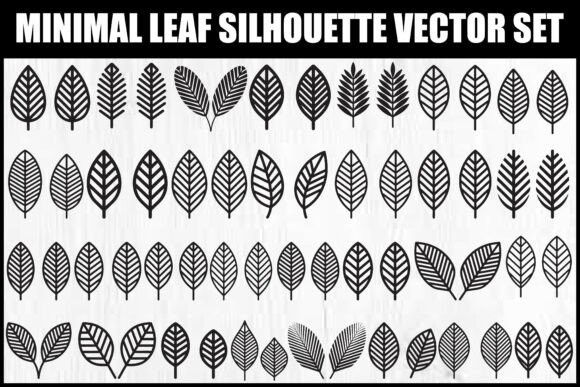
Unlocking the Potential of the Minimal Leaf Silhouette Vector Set for Modern Design
In the world of digital design and crafting, simplicity often reigns supreme. Whether you are a seasoned graphic designer, a small business owner creating a brand identity, or a hobbyist looking to personalize home decor with a Cricut machine, the Minimal Leaf Silhouette Vector Set offers a foundational toolkit that bridges the gap between professional aesthetics and accessible creation. This collection is not just a bundle of images; it is a curated library of organic shapes designed to integrate seamlessly into diverse projects. However, despite the apparent straightforwardness of using black and white leaf outlines, many creators stumble over technical nuances that can compromise their final output. Understanding how to properly evaluate, select, and apply these assets is crucial for achieving high-quality results without unnecessary frustration or wasted resources.
The Hidden Complexity of "Simple" Designs
At first glance, a minimal leaf design appears effortless. It is merely an outline or a solid shape, devoid of intricate shading or complex gradients. This simplicity is precisely why the minimal leaf silhouette vector set is so popular for logo design, stationery art, and laser cutting. Yet, this very simplicity often leads to a common misconception: that all vector files are created equal. Many beginners download free or low-cost clipart only to discover that the paths are messy, the lines are uneven, or the file formats are incompatible with their specific software. When you rely on a poorly constructed leaf vector, you risk ruining a physical material during cutting or producing a pixelated mess in print.
The primary mistake here is overlooking the structural integrity of the vector paths. A high-quality botanical leaf silhouette should have smooth, continuous curves without unnecessary anchor points. If a file has too many nodes, laser cutters may stutter, and vinyl cutters might tear delicate materials. Before committing to a download or purchase, always inspect the file in your vector editing software. Zoom in closely on the curves. Are they fluid, or do they look jagged when magnified? A professional leaf outline will maintain its crispness at any scale, whereas a low-quality conversion from raster to vector will reveal its flaws immediately.
Navigating File Formats and Compatibility
Another frequent oversight involves the selection of file formats. A comprehensive set typically includes EPS, SVG, PNG, and JPG files. While having options is beneficial, using the wrong format for your specific workflow can lead to significant headaches. For instance, attempting to use a JPG file for a vinyl decal project is a recipe for disaster because JPGs are raster images with backgrounds that cannot be easily removed without losing edge quality. Similarly, while PNG files support transparency, they are resolution-dependent. If you scale a small PNG up for a large wall mural, it will become blurry.
To avoid these pitfalls, prioritize the SVG or EPS formats for any project requiring resizing or cutting. These vector formats ensure that your nature silhouette remains sharp whether it is printed on a business card or etched onto a wooden sign. If you are using software like Adobe Illustrator, CorelDRAW, or Inkscape, the EPS format is often the most robust choice for print production. Conversely, if you are working within web design tools or crafting machines like Cricut Design Space, the SVG format is generally the standard. Always verify that the plant leaf svg files you acquire are compatible with your specific version of software to prevent import errors.
Practical Applications and Common Pitfalls
The versatility of a leaf bundle extends far beyond simple decoration. Entrepreneurs often use these elements for branding, incorporating a modern botanical motif into logos for eco-friendly products, spas, or organic food brands. However, a common error in branding is the lack of customization. Using a stock leaf icon set exactly as downloaded can make your brand look generic. To stand out, consider modifying the organic shapes. You might combine two different leaf silhouettes to create a unique monogram or adjust the stroke weight to match your brand's typography. The goal is to use the minimal foliage art as a starting point, not the final destination.
For crafters utilizing die-cutting machines, the issue often lies in the complexity of the cut relative to the material. A laser cut leaf design intended for thick wood might be too delicate for thin paper, causing it to rip during the weeding process. Conversely, a design optimized for vinyl might lack the structural connections needed for a sturdy paper snowflake-style decoration. Before sending a job to your machine, perform a test cut on scrap material. This simple step saves money on expensive vinyl rolls or specialty papers and ensures that the decorative leaf svg performs as expected.
Evaluating Quality Before You Commit
When searching for the right assets, the sheer volume of available nature clipart sets can be overwhelming. It is tempting to grab the first free black and white leaf pack you find, but this often leads to inferior results. High-quality collections, such as a premium vector leaf collection, usually provide detailed previews and licensing information. Check if the license allows for commercial use if you intend to sell products featuring the designs. Many free resources restrict usage to personal projects only, and violating these terms can lead to legal complications for small business owners.
Furthermore, pay attention to the consistency of the set. A well-curated botanical svg set will feature leaves that share a similar stylistic language—consistent line weights, similar levels of abstraction, and harmonious proportions. Mixing a highly realistic floral leaf vector with a cartoonish simple leaf design in the same project can create visual dissonance that confuses the viewer. Ensure that the leaf shapes set you choose aligns with the overall aesthetic of your project, whether that is ultra-modern, rustic, or elegant.
- Check Path Cleanliness: Ensure there are no stray points or overlapping paths that could confuse cutting machines.
- Verify Licensing: Confirm whether the digital leaf pack permits commercial application if you plan to sell your creations.
- Test Scalability: Resize the leaf motif to extreme dimensions to ensure no pixelation or distortion occurs.
- Assess Style Consistency: Make sure all elements in the outline leaf bundle work well together visually.
Ultimately, the value of a Minimal Leaf Silhouette Vector Set lies in its ability to streamline your creative process while providing a polished, professional look. By taking the time to understand the technical requirements of your specific medium—be it digital print, vinyl cutting, or laser engraving—you can avoid common traps that hinder productivity. Treat these natural elements as flexible building blocks. With the right approach, a simple leaf illustration can transform into a powerful component of your brand identity, a stunning piece of journal decor, or a best-selling item in your online shop. The key is to respect the tool, understand its limitations, and leverage its strengths to create work that truly resonates with your audience.