Unlocking Timeless Elegance: A Complete Guide to Vintage Calligraphic Dividers for Modern Design
In the fast-paced world of digital design, where minimalism often reigns supreme, there remains a persistent and growing appreciation for the ornate, the handcrafted, and the historically rich. At the heart of this aesthetic revival are vintage calligraphic dividers. These intricate graphical elements serve as more than just decorative flourishes; they are essential tools for guiding the reader's eye, establishing hierarchy, and infusing a project with a sense of tradition and sophistication. Whether you are a seasoned graphic designer or a hobbyist looking to elevate your next craft project, understanding the versatility and technical advantages of these assets is key to unlocking their full potential.
What Are Calligraphic Dividers and Why Do They Matter?
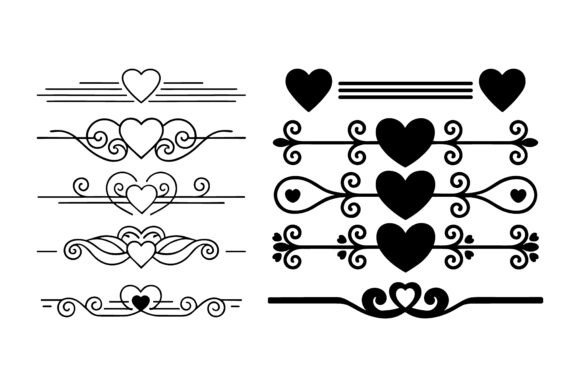
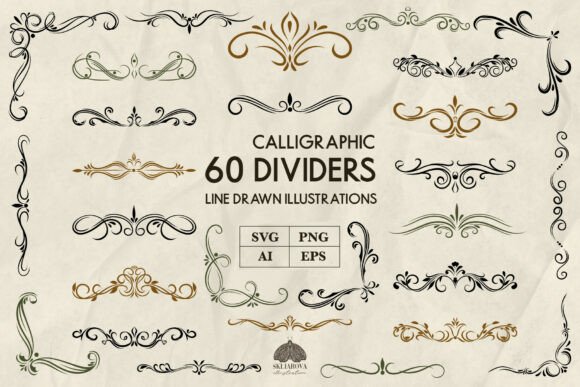
At their core, calligraphic dividers are decorative lines or shapes used to separate sections of text or content. Unlike standard horizontal rules found in basic word processing, vintage calligraphic dividers are characterized by their fluid, hand-drawn appearance. They mimic the strokes of a quill or brush, featuring swirls, loops, leaf motifs, and elaborate symmetrical patterns that harken back to the Victorian era, the Art Nouveau movement, and classical manuscript illumination.
The significance of these elements lies in their ability to create visual breathing room. In long-form content, such as wedding invitations, menus, or storytelling blogs, a wall of text can be overwhelming. A well-placed divider acts as a gentle pause, signaling a transition in thought or topic without the abruptness of a page break. Furthermore, they establish a specific mood. While a straight line feels corporate and sterile, a swirling calligraphic element suggests romance, history, and attention to detail. This makes them indispensable for industries where emotion and aesthetics drive decision-making, such as the wedding industry, luxury branding, and artisanal product packaging.
The Technical Advantage: Vector vs. Raster Formats
When sourcing design assets, understanding file formats is crucial for maintaining quality. A comprehensive set of vintage dividers typically includes both vector files (AI, EPS, SVG) and raster images (PNG). Each serves a distinct purpose in your workflow.
Vector files are the gold standard for scalability. Because they are built on mathematical paths rather than pixels, vectors can be reduced or enlarged without any loss of quality. This means you can take a small divider from a business card and blow it up to the size of a billboard, and the edges will remain crisp and sharp. Additionally, vector files offer unparalleled flexibility regarding color. Since the shapes are defined by paths, you can easily change the stroke color to match any brand palette or theme using software like Adobe Illustrator or CorelDRAW. This adaptability is vital for designers who need to iterate quickly across different client needs.
On the other hand, PNG files provide immediate usability for those who may not have advanced vector editing software. High-quality PNGs, such as those sized at 4100x4100 pixels with a resolution of 300 DPI, offer print-ready clarity. The transparent background is a critical feature here, allowing you to overlay the divider onto any colored paper, fabric, or digital background without unsightly white boxes surrounding the design. For users working in platforms like Canva, Microsoft Word, or sublimation software, these high-resolution PNGs are often the most efficient choice.
Practical Applications in Modern Creativity and Business
The utility of vintage calligraphic dividers extends far beyond traditional paper printing. In today's creator economy, these assets are foundational elements for a wide array of physical and digital products. Here is how these versatile graphics fit into various modern contexts:
- Wedding and Event Stationery: This is perhaps the most classic application. Dividers are used to separate the ceremony details from the reception information on invitation suites. They frame monograms on napkins and add elegance to menu cards. The hand-drawn nature of these elements complements the personalized feel couples seek for their special days.
- Sublimation and Print-on-Demand: With the rise of custom merchandise, dividers are frequently used in sublimation designs. Whether printing on t-shirts, mugs, or pillows, the high-resolution PNGs ensure that the fine details of the calligraphy do not become pixelated. A delicate floral divider can turn a plain ceramic mug into a boutique home decor item.
- Fabric and Textile Design: When printing on fabrics, the scalability of vector files allows designers to create repeating patterns or large-scale borders for quilts, table runners, and apparel. The ability to change colors ensures the design harmonizes with the fabric's base tone.
- Digital Marketing and Branding: Even in the digital realm, these elements hold sway. Bloggers use them to break up long articles, enhancing readability and SEO by keeping users on the page longer. Social media managers incorporate them into quotes and announcements to give brands a heritage or "boutique" feel that stands out against the noise of flat design.
- Crafting and DIY Projects: For owners of cutting machines like Cricut or Silhouette, SVG files are essential. These allow the machine to cut the divider shape precisely out of vinyl, cardstock, or heat transfer material. This opens up possibilities for custom wall decals, scrapbooking layouts, and personalized gift tags.
Bridging the Gap Between Tradition and Technology
It is a common misconception that "vintage" styles are outdated or incompatible with modern technology. In reality, the digitization of hand-drawn calligraphic elements represents a perfect marriage of old-world charm and new-world efficiency. By converting traditional ink-and-paper sketches into SVG, AI, and EPS formats, designers preserve the organic imperfections that make human art beautiful while granting themselves the power of infinite duplication and modification.
This fusion allows small business owners to compete with larger corporations. A local bakery, for instance, can use a set of 60 unique dividers to create a distinct visual identity for their pastry boxes and social media posts without hiring an expensive illustrator for every single asset. The availability of diverse elements within a single set ensures that a brand can maintain consistency while avoiding repetition. With 60 different variations available in a typical collection, a designer can find a unique flourish for every month of the year or every type of product in a catalog.
How to Choose and Use Dividers Effectively
To get the most out of these resources, one must approach them with an eye for balance. While it is tempting to use every swirl and loop available, restraint is often the hallmark of good design. Here are a few guidelines to ensure your use of calligraphic dividers enhances rather than clutters your work:
- Match the Mood: Ensure the style of the divider matches the typography and the overall theme. A heavy, baroque divider might overwhelm a light, airy font, whereas a delicate vine motif might get lost against bold, industrial lettering.
- Mind the Scale: Just because you can enlarge a vector infinitely doesn't mean you always should. Consider the viewing distance. Fine details in calligraphy are best appreciated in close-up applications like invitations or phone screens, whereas bolder shapes work better for large-format printing like banners.
- Color Harmony: Take advantage of the editable nature of vector files. Instead of defaulting to black, sample colors from your primary imagery or brand palette. A divider in a muted gold or sage green can subtly reinforce a color scheme without dominating the layout.
- Layering Techniques: Don't be afraid to layer dividers behind text or images to create depth. Using opacity adjustments on PNG files can create watermarks or textured backgrounds that add sophistication to certificates and awards.
In conclusion, vintage calligraphic dividers are far more than simple decorations; they are versatile tools that bridge the gap between historical elegance and modern functionality. Whether utilized in high-resolution sublimation printing, precise vinyl cutting, or scalable vector branding, these elements empower creators to produce work that feels personal, professional, and timeless. By understanding the technical benefits of formats like SVG, AI, EPS, and PNG, and applying them with intentionality across various mediums from wedding cards to t-shirts, designers can elevate their projects and connect more deeply with their audience through the enduring language of beautiful design.